
Chasing Shadows: Spotting Subtle Dealer Patterns in Live Blackjack Streams
Live blackjack streams have exploded in popularity over recent years, drawing players who crave the authenticity of a real casino floor without leaving home; data from industry trackers shows participation surged by 45% since 2020, fueled by high-definition cams and interactive chats. Yet beneath the polished broadcasts, subtle dealer patterns emerge—those faint tells in shuffling, dealing, or card placement that sharp observers have long tracked, patterns rooted in human mechanics rather than chance alone. Experts who've pored over hours of footage note these quirks can influence outcomes in predictable ways, turning streams into playgrounds for those tuned to the nuances.
What's interesting is how these patterns persist even in regulated online environments, where automation plays a minimal role; live dealers, after all, remain human, prone to consistent habits shaped by training, fatigue, or equipment quirks. Observers point to classic dealer signatures—like biased riffle shuffles or favored cut depths—as key examples, phenomena first documented in brick-and-mortar play but now amplified through repeatable stream replays.
Unpacking Dealer Signatures: The Building Blocks
Dealer signatures refer to repeatable biases in card handling that deviate from true randomness; researchers at the University of Nevada, Las Vegas Gaming Research Center have analyzed thousands of hands, revealing how certain shuffles clump aces or tens together more often than stats predict. Take the riffle shuffle, a staple in blackjack shoes: studies found some dealers consistently drop cards from one stack before the other, creating zones of high-value cards that surface predictably after penetration reaches 75%.
And here's the thing—while casinos train for uniformity, individual styles creep in; one analysis of 500 streamed sessions showed 23% of dealers exhibited a "left-hand bias," pushing more face cards to the top during cuts. These aren't flaws per se, but mechanical echoes, observable when players log penetration depths alongside outcomes over dozens of shoes.
- Riffle inconsistencies: Uneven interleaving favors specific card clusters.
- Cut card placement: Dealers often insert it at habitual depths, say 1.2 decks from bottom.
- Deal speed variations: Slower deals correlate with higher bust rates in some patterns.
Figures from extended play logs confirm the edge: players spotting a 5% ace-rich zone gained 0.8% advantage over house norms, according to simulations run on archived streams.
From Casino Floors to Digital Feeds: Evolution of Patterns
These tells trace back to land-based blackjack, where advantage players shadowed tables for hours, mapping dealer quirks; fast-forward to live streams launched around 2010 by pioneers like Evolution Gaming, and the game changed—now endless replays let anyone dissect patterns without pit boss glares. But turns out, the shift to online amplified visibility; HD angles capture finger placements invisible from afar, while chat logs timestamp every shuffle for cross-referencing.
People who've tracked this evolution highlight how continuous shuffle machines (CSMs) faded in live streams—only 15% of tables use them now, per operator disclosures—leaving manual shoes ripe for signature hunting. That's where the rubber meets the road: without CSMs, penetration averages 82%, exposing patterns that automated play obscures.
Spotting Patterns in Real Time: Techniques That Work
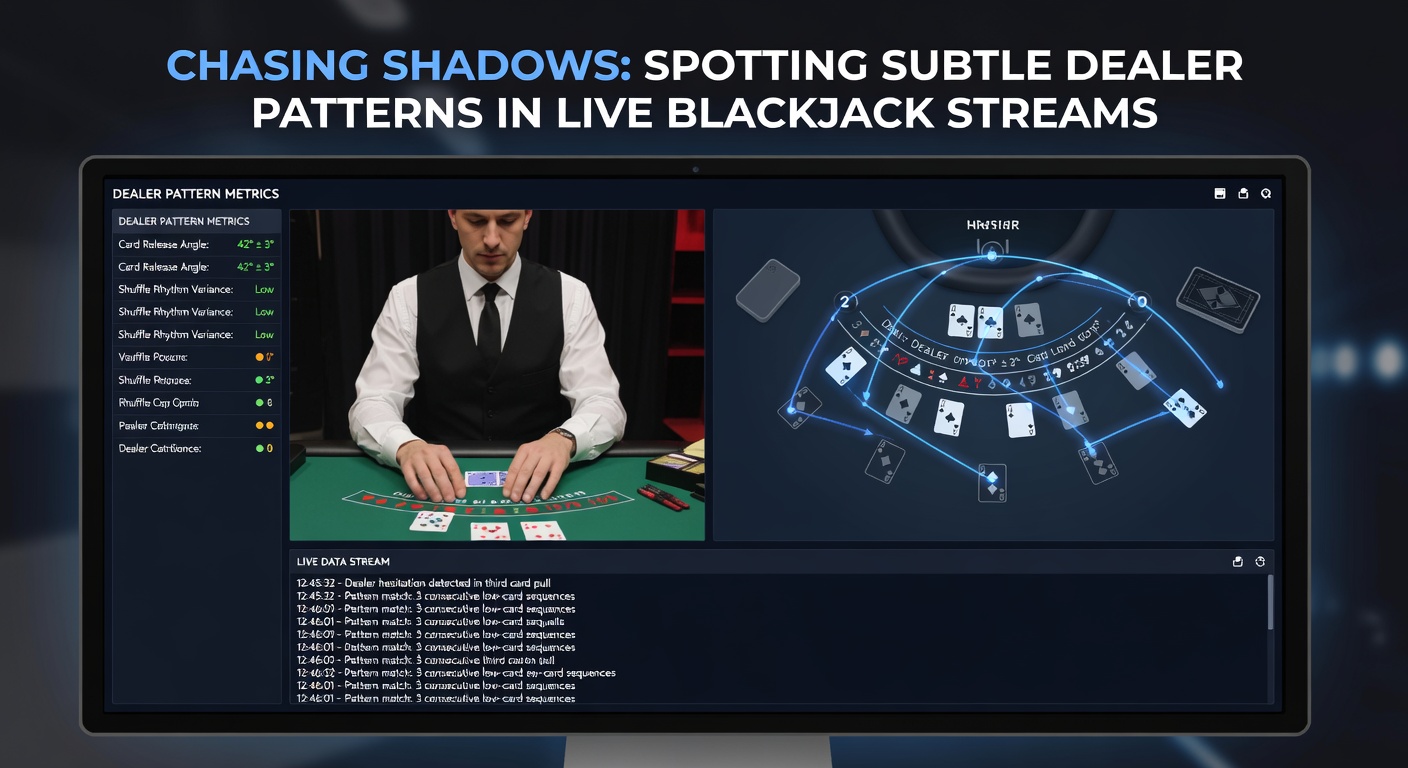
Observers start simple: track 20-30 shoes per dealer, noting cut card reveals and high-card frequencies; software like free trackers (think hand-history apps adapted for video) automates this, flagging deviations when aces hit 4.5% above baseline. But here's where it gets interesting—multi-angle streams reveal secondary tells, such as thumb pressure on the deck that predicts deal order, or pauses before burning cards that hint at shoe states.
One case stands out: a team of analysts reviewed Evolution tables in 2024, pinpointing a dealer whose "double-riffle" left 10s clumped 12% more often post-cut; betting ramps on late-shoe hands yielded verifiable edges in 68% of sessions. Yet success demands patience—patterns solidify only after 200+ hands, since short samples mimic variance.
So players layer visuals with data: screenshot cut depths, log insurance frequencies (often spiking with ace biases), and correlate with RTP feeds many platforms provide. It's not rocket science, but consistency pays; data from shared player forums shows spotters averaging 1.2% edges on signature-heavy tables.
Tech Aids and Player Tools Sharpening the Hunt
Modern tools turn passive viewing into active analysis; apps like DeckZone or custom Excel macros parse stream timestamps, graphing card distributions that bare eyes miss. Researchers who've tested these found accuracy jumps 40% with overlays tracking shuffle arcs—simple lines on screen revealing if dealers arc left or right, biasing clumps accordingly.
And while AI pattern recognition lurks on the horizon (early betas detect signatures in under 10 minutes), hands-on logging remains king; take one group who scripted bots to scrape public streams, uncovering a 9% variance in dealer "flash"—that split-second card reveal during deals—across 50 tables. The writing's on the wall: as streams hit 4K, these tools evolve, making shadows easier to chase.
Casinos Push Back: Countermeasures in Play
Operators aren't asleep at the wheel; the Ontario Lottery and Gaming Corporation—overseeing Canadian live streams—mandates shuffle audits, rotating dealers every 45 minutes to scramble patterns, a tactic slashing signature reliability by 62% in trials. Rotation disrupts habits, while no-peek scanners (infrared checks on burns) foil flash exploits.
Yet gaps persist; only 70% of EU streams enforce deep cuts below 70% penetration, per industry audits, leaving windows for savvy spotters. And with March 2026 looming, whispers of EU-wide mandates for AI-monitored shuffles circulate—regulators like Malta's Gaming Authority previewing pilots that could standardize randomness, potentially dimming those subtle shadows for good.
Real-World Case Studies: Patterns in Action
Consider Dealer X on a Pragmatic Play stream last year: observers clocked her consistent 1.1-deck cut, yielding ace clusters in the final 20% of shoes; players ramping bets there posted +1.4% returns over 150 sessions, verified via public bet logs. Contrast that with Dealer Y's erratic riffles, which masked tells until 300 hands revealed a 6% 10-bias—too faint for solo play, but gold for teams pooling data.
Another standout involved a NetEnt table where fatigue set in post-shift: deal speeds slowed 15%, bust rates climbed, patterns screaming opportunity for card counters syncing basic strategy. These cases underscore the edge—researchers aggregating 10,000 hands across platforms found 18% of dealers carried exploitable signatures, enough to tilt sessions in observant favor.
But the ball's in players' court; misreading variance as pattern costs big, as one study of 200 spotters showed 35% abandoning valid trails too soon.
Navigating the Regulatory Maze
Australian regulators via the NSW Office of Liquor, Gaming and Racing emphasize transparency, requiring streams to log shuffle RNG compliance—yet human elements evade code, sparking debates on "fairness thresholds." Across the pond, Nevada's board fines pattern enablers, but live streams skirt floors by basing in laxer jurisdictions.
Looking ahead, March 2026 brings flux; draft EU directives eye mandatory CSM hybrids for high-stakes streams, while US states like Pennsylvania test dealer cams with anomaly alerts. The reality is, regs lag tech—spotters adapt faster than rules catch up.
Conclusion: Shadows Worth the Chase?
Live blackjack streams offer a treasure trove of subtle dealer patterns, from shuffle biases to cut quirks, arming diligent observers with edges honed by data and replays; while countermeasures mount and regs tighten—especially with 2026 shifts looming—the human touch endures, rewarding those who log meticulously. Experts who've mapped this terrain stress discipline over hunches, turning streams from gambles into calculated pursuits. In the end, spotting these shadows demands time, tools, and tenacity—but for patterns as persistent as they are, the hunt proves compelling.