
Coordinating Bonus Timelines with Probability Models Across Gaming Platforms
Operators align promotional reward schedules with the underlying probability structures that govern each game format, and this coordination draws directly from return-to-player percentages, volatility indexes, and expected value calculations that differ sharply between slots, roulette variants, blackjack tables, and poker tournaments.
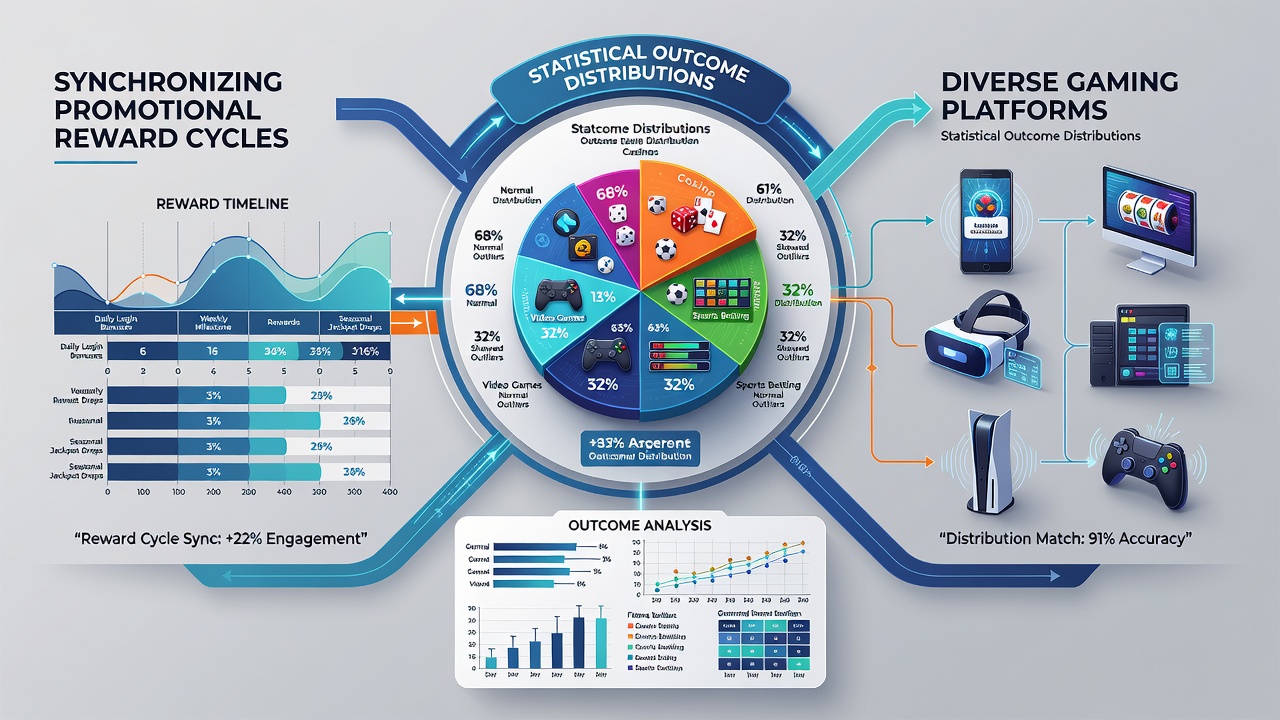
Statistical outcome distributions describe how frequently certain results occur over large sample sizes, while reward cycles refer to the timing and structure of bonuses such as deposit matches, free spin allotments, and cashback tiers that reset or refresh according to predetermined intervals.
Core Statistical Elements in Gaming Formats
Slots operate under fixed RTP ranges that typically fall between 94 and 98 percent according to regulatory filings, yet their outcome distributions show high variance because individual spin results cluster around infrequent large payouts separated by extended sequences of smaller or zero returns. Table games present tighter distributions because rules limit deviation; European roulette carries a consistent 2.7 percent house edge across every spin, whereas blackjack RTP fluctuates between 99.4 and 99.6 percent when optimal strategy applies, creating narrower deviation bands that reward systems must accommodate.
Poker introduces player-skill variance layered over random card distributions, so promotional cycles often tie rake rebates or tournament overlays to longer measurement windows that smooth out short-term swings.
Mechanics of Reward Cycle Synchronization
Design teams calculate the expected cost of each promotional element against the game's hit frequency and payout distribution, then set expiration windows and wagering multipliers that keep total promotional liability within target margins. When a slot title carries elevated volatility, cycles extend across multiple sessions so that bonus funds reach players during periods when large payouts become statistically more probable, reducing the chance that rewards evaporate before meaningful outcomes materialize.
Lower-volatility games receive shorter cycles because steady small returns allow quicker recycling of promotional value without risking overexposure. Data from the Nevada Gaming Control Board shows aggregate slot hold percentages remained stable between 2023 and 2025 while promotional expenditure as a share of revenue shifted by less than one percentage point, indicating operators refined timing rather than increasing total outlay.
Analysts apply Monte Carlo simulations to forecast how different cycle lengths interact with each format's distribution tail, and these models incorporate seasonal player-volume patterns that peak during holiday periods or sporting events.
Cross-Format Implementation Patterns
Multi-game platforms adjust reward triggers separately for each vertical. A progressive jackpot slot might receive a free-spin bundle valid for 72 hours timed to coincide with the machine's documented average payout interval, whereas a live-dealer blackjack lobby might issue smaller cashback increments every 24 hours because its outcome distribution resets with each hand. Poker rooms frequently link leaderboard rewards to monthly volume targets that align with the central limit theorem, allowing variance to converge toward expected values over hundreds of hands.
June 2026 marks the scheduled release of updated outcome-distribution datasets from several North American and European regulators, and operators have begun recalibrating cycle parameters in advance of those figures to maintain compliance with new reporting thresholds.
Regulatory and Measurement Considerations
Authorities in multiple jurisdictions require transparent disclosure of how promotional mechanics interact with game mathematics. Australian research published through the Queensland Government Statistician's Office tracks promotional redemption rates against game-type volatility, revealing that synchronized cycles produce redemption patterns that more closely track theoretical loss curves. Canadian provincial data similarly records that staggered bonus windows across game categories reduce the concentration of unredeemed promotional balances at the end of each fiscal quarter.
Measurement relies on key performance indicators such as promotional cost per active player, bonus contribution to handle, and the ratio of redeemed to issued value segmented by game format; these metrics feed back into simulation models that refine future cycle lengths.
Conclusion
Effective coordination between promotional timelines and statistical outcome distributions requires continuous calibration across every gaming format an operator offers. As new datasets emerge in June 2026, platforms will further refine these alignments, maintaining equilibrium between player engagement targets and mathematical risk parameters without altering the fundamental probabilities embedded in each game.