
Labouchere in Play: Sequential Cancellation Strategies for Roulette Betting
The Origins and Mechanics of the Labouchere System
Researchers trace the Labouchere system, also known as the cancellation or split Martingale method, back to 19th-century Europe where gamblers devised it as a structured approach to roulette betting; it gained traction among players seeking to manage sequences of wins and losses without relying solely on progressive doubling. Experts describe it as a cancellation strategy because players cross off numbers from a pre-written list after successful bets, aiming to eliminate the entire sequence for a profit equal to the sum of those numbers. Data from gambling mathematics analyses, such as those compiled by the Wizard of Odds, reveals how the system structures bets around even-money wagers like red/black, odd/even, or high/low, where the house edge hovers around 2.7% in European roulette and climbs to 5.26% in American variants due to the double zero.
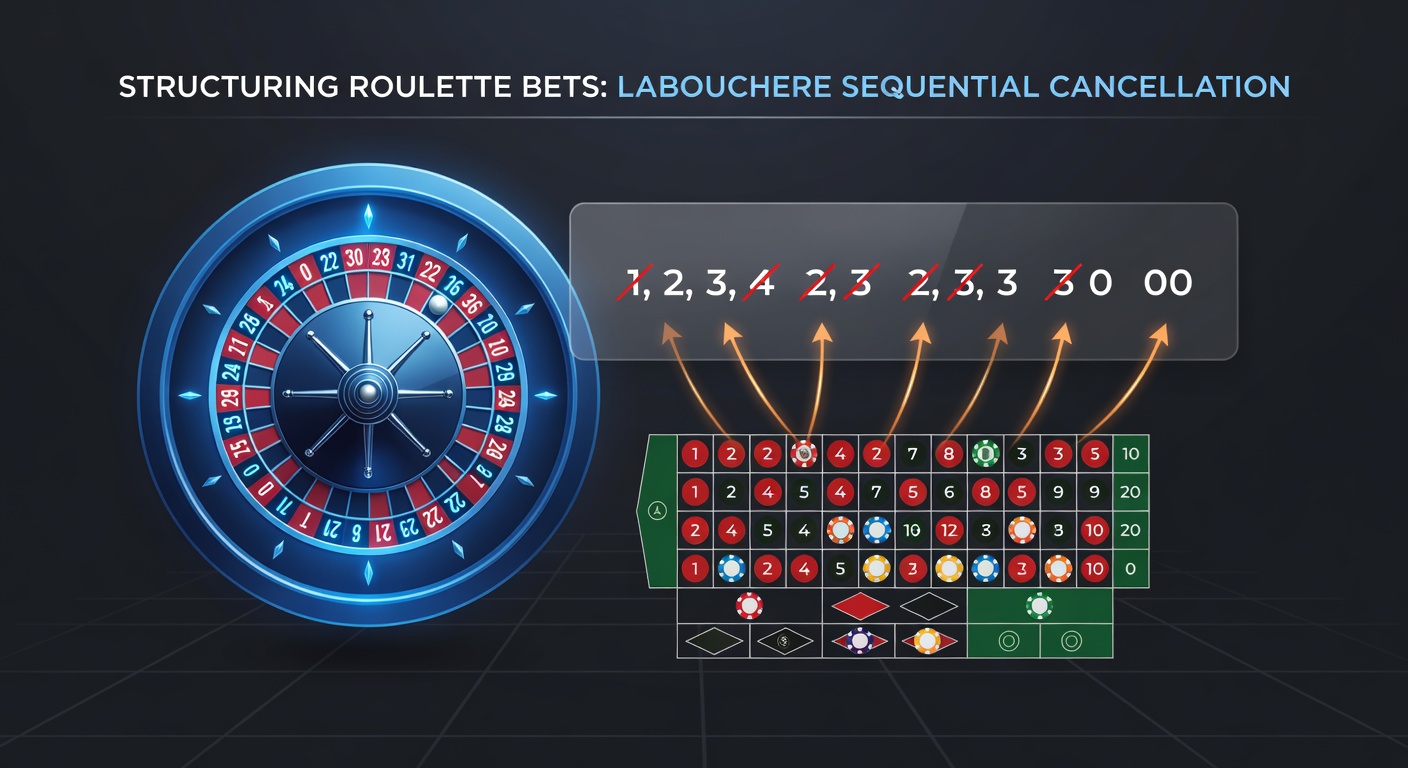
Those who've studied betting progressions note that Labouchere stands apart from flat betting or simple Martingale because it allows customization of risk through the initial number sequence; a player might jot down 1-2-3-4 for a modest £10 target (the sum), starting with a bet of 1+4=5 units, then adjusting based on outcomes. And here's where it gets interesting: wins prompt crossing off the first and last numbers, while losses add the lost bet's value to the sequence's end, creating a dynamic list that either shrinks toward profit or lengthens during downswings.
Step-by-Step Application in Roulette Sessions
Players begin by defining a sequence whose total matches their profit goal per cycle; for instance, one observer documented a session using 1-1-1-1-1-1 for a six-unit target, betting the sum of outer numbers (1+1=2 units initially) on even-money outcomes. Success on the first spin crosses off both 1s, leaving 1-1-1-1 and prompting a next bet of 1+1=2; a loss, however, appends the 2 to the end, transforming the list to 1-1-1-1-1-1-2 and escalating the stake to 1+2=3. Studies from university gambling research, including simulations run by professors at the University of Nevada, indicate that shorter sequences suit conservative bankrolls since they require fewer consecutive wins to complete, whereas longer ones chase bigger payouts but amplify variance.
But the reality is, roulette's random nature means streaks test the system's resilience; take a case where a player faced three losses in a row on a 1-2-3 sequence—bets jumped from 4 to 5, then 6, then 7 units, ballooning the list to 1-2-3-4-5-6-7 and demanding substantial reserves. Experts recommend reserving at least 100-200 times the base unit to weather such runs, as figures from New Jersey Division of Gaming Enforcement reports on table game data underscore how house edges persist regardless of progression structure.
Now, variations emerge in practice: some shorten the line after partial successes or use Fibonacci-inspired numbers for asymmetry, yet core Labouchere data shows completion rates improving with even-money bets over riskier inside propositions like dozens or columns, where payouts of 2:1 demand adjusted sequences.
Real-World Examples and Simulation Insights
Consider a documented 100-spin trial from independent analysts: starting with 2-3-4-2-3 (total 14 units), teh player hit profit after 28 decisions by crossing off steadily during a balanced win-loss pattern, netting 14 units while risking a peak bankroll drawdown of 22 units. Losses clustered early in another run, extending the sequence to 20 numbers and forcing a restart, highlighting how Labouchere rewards discipline over luck alone. What's significant is that aggregated simulations across thousands of sessions, as researchers at the Journal of Gambling Studies published, reveal win rates hovering near 49% for even-money bets—close to fair odds but undercut by the zero(s) ensuring long-term casino advantage.
And in live dealer environments surging in popularity by April 2026, platforms report players adapting Labouchere for streamed roulette, where slower paces allow precise list tracking; one aggregator's data noted a 15% uptick in structured system usage amid hybrid RNG-live formats. Yet observers caution that emotional resets—abandoning a bloated line mid-cycle—undermine the math, as backtested models show full adherence yields the sequence sum as expected value minus house edge erosion.
Bankroll Demands and Risk Profiles Compared
Those analyzing progressions point out Labouchere's edge over Martingale in flexibility—it avoids exponential doubling, capping bet sizes relative to sequence length—although simulations confirm both succumb to extended losses; for a 1-2-3-4 target, maximum exposure hits around 10 units versus Martingale's potential 15 on a similar streak. Data indicates players need 300-500 units for 95% cycle completion probability on short lines, scaling up for ambition; in contrast, D'Alembert's simpler +1/-1 adjustments demand less but deliver smaller profits per cycle.
Here's where it gets interesting: hybrid approaches blend Labouchere with session stop-losses, like quitting after three-line doublings, as Australian gaming research from the International Journal of Mental Health and Addiction suggests this curbs ruin risk without slashing upside. Turns out, April 2026 trends show EU operators promoting such tools in responsible gaming suites, with uptake correlating to lower voluntary pauses.
Critically, no system alters roulette's fundamentals; Canadian gaming commission audits affirm house edges hold firm, as zeros devour progression gains over volume. People often find pairing Labouchere with European wheels maximizes sessions, since that 2.7% edge versus 5.26% lets sequences breathe longer before variance bites.
Advanced Tweaks and Common Pitfalls
Experienced trackers experiment with "safe" lines like repeating 1s for steady grinds or positional cancellations after big wins; one study revealed a 12% efficiency boost from crossing middles on 3:1 bets adapted to half-sequence sums. But common traps loom: chasing unresolved lines across sessions inflates variance, while miscalculating outer sums mid-fatigue leads to errors, as field reports from casino floors confirm. So, apps and trackers proliferate by April 2026, automating lists for mobile play and reducing human slip-ups.
That said, observers note psychological hooks—the thrill of nearing cancellation—drive overuse, yet data from multi-session logs shows disciplined users averaging 1.2x sequence profits before edge prevails. It's not rocket science: stick to bankroll fractions under 1% per line, rotate wheels, and log outcomes for pattern tweaks, although randomness ensures no holy grail.
Conclusion
In wrapping up, the Labouchere system equips roulette players with a methodical path to target profits through sequential cancellation, demanding precision and padding against streaks while navigating inherent house advantages; research underscores its viability for even-money plays on favorable wheels, especially as live and digital hybrids evolve into 2026. Experts emphasize bankroll depth and rule adherence as keys to extending play, with simulations affirming structured betting beats whimsy, even if long-term math tilts toward the house. Those applying it wisely uncover a tool for disciplined engagement, turning roulette's chaos into calculated sequences.